Patty Chang with Astrida Neimanis & Aleksija Neimanis
We Are All Mothers (2022)
Single-channel digital video
19 mins 53 secs
Screening 8-31 January 2026
-
-
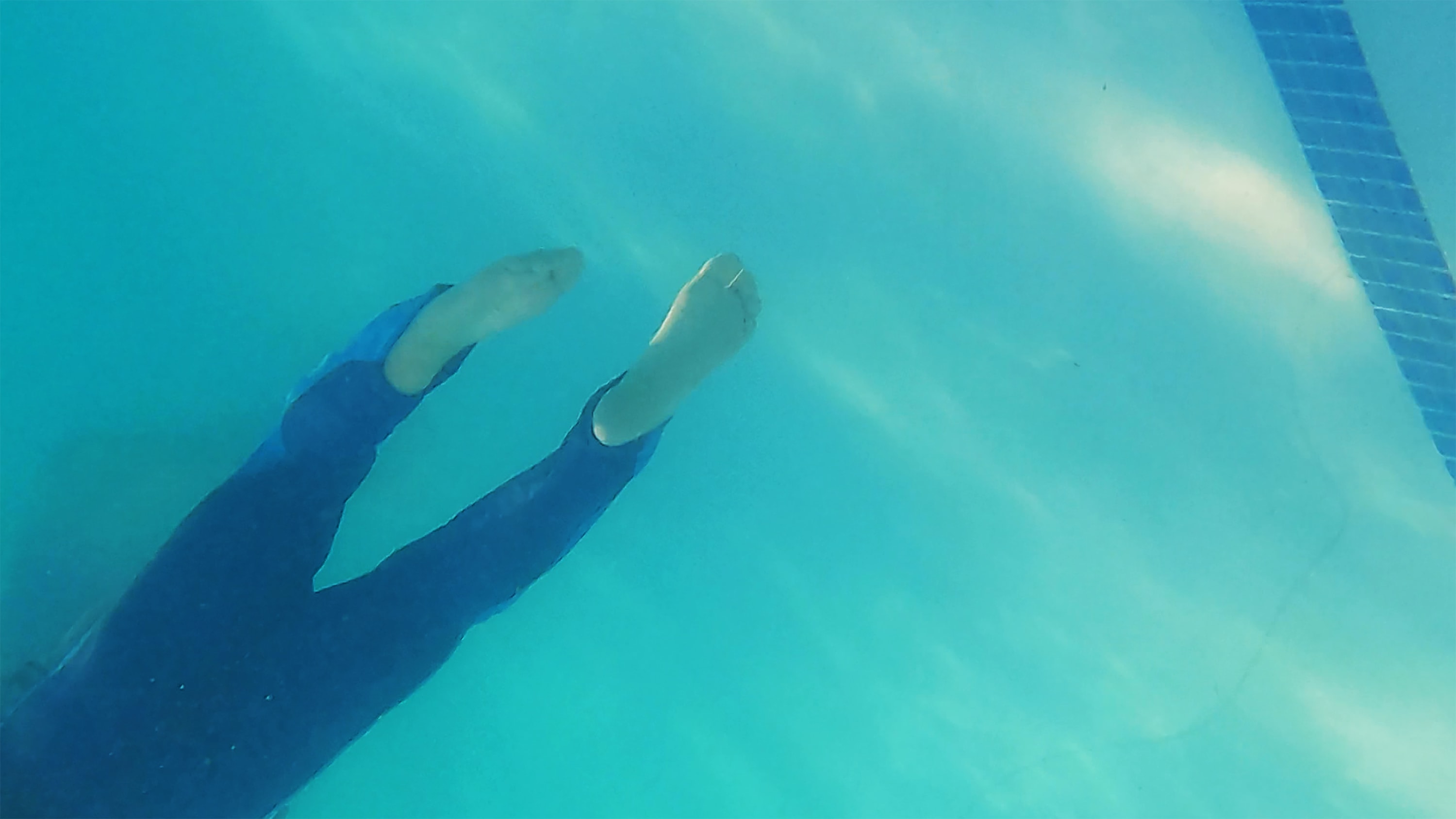
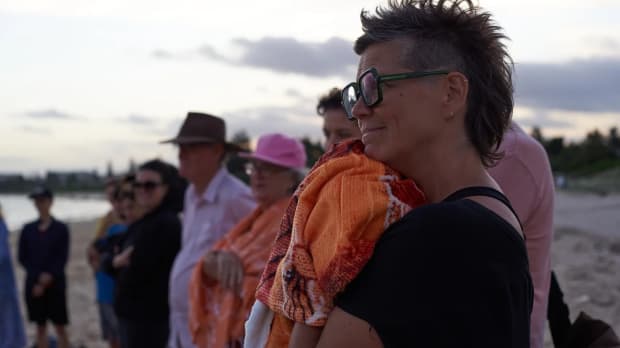
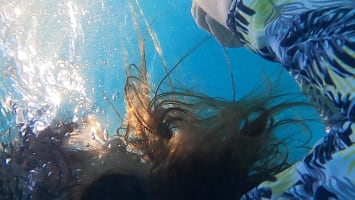
 Still from We Are All Mothers (2022) by Patty Chang with Astrida Neimanis & Aleksija Neimanis
We Are All Mothers is a video essay under the rubric of the collaborative and interdisciplinary research project, Learning Endings. Initiated in collaboration with artist Patty Chang, veterinary pathologist Aleksija Neimanis and cultural theorist Astrida Neimanis, the collective studies the death of aquatic mammals to better understand how endings and restoration inform one another in today’s cultural, political, and environmental contexts. Combining artistic, social, and scientific perspectives, Learning Endings is presented through publications, programs, and multimedia works. Intersections between our respective fields challenge and reinforce each other to form a holistic understanding of the projects’ stakes; the health of oceanic life, the cultivation of eco-feminist strategies of reparative care, and understanding cycles of inherited generational traumas and toxins.
Scientist Aleksija Neimanis frames wildlife health findings within a One Health context, in which human, animal, and ecosystem health are all connected, to help inform policy. Cultural theorist Astrida Neimanis focuses on human-water relationships and climate catastrophe as a symptom of corrupted social and cultural relations. Patty Chang's video and performance practice probes concepts of identity, gender, transnationalism, colonial legacies, the environment, large-scale infrastructure, and impacted subjectivities.
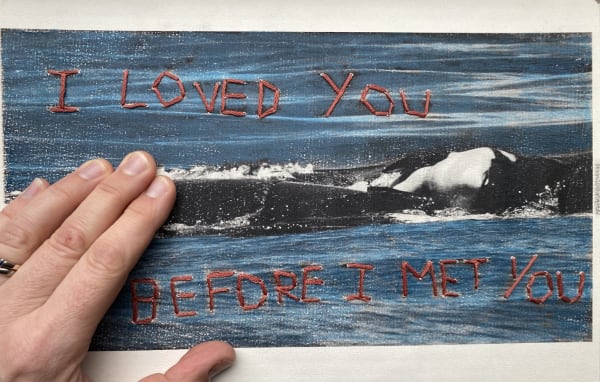
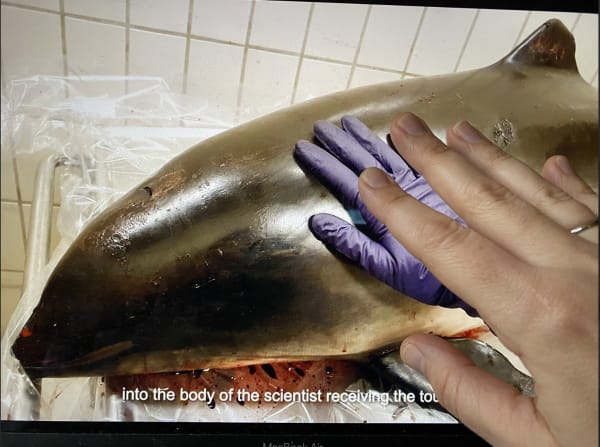
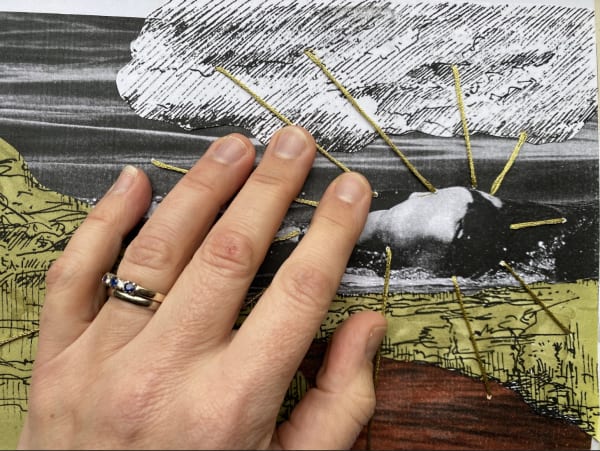
The global pandemic acts as a conceptual and aesthetic frame for We Are All Mothers as we converged virtually to witness and learn from the marine life autopsies being performed. This process is also known as Necropsy, cutting open an animal to deduce the cause of death. As a collective, we introduced a ritual of touch before the autopsies began–a gesture to ground meaning and intention in the protocols of clinical afterlife care. The act was documented and filed in a “touch archive” that lives alongside the veterinary archive of cetacean autopsy findings. Like the necropsy archive, the touch archive wades into death to better support conditions for life.
Incorporating communal mourning into the practice of multispecies care, the touch archive encourages scientists to pause, reflect, and observe the purpose behind the procedures, incorporating intention and deep presence within the scientific method. I have introduced a surrogate for the touch archive in the form of a memory game. Participants turn over cards to reveal pairings of images from the touch archive. Aspects of the memory game – keeping lifeforms in mind when out of sight, reaching out, touching, reflecting, and witnessing one’s participation – all mirror the gestures and rituals of the touch archive.
Just as we as researchers gave our complete focus to the animal, We Are All Mothers directs the viewer's attention to the act of giving care and the new knowledge that intentional witnessing produces. Recalling an unexpected moment in one specific autopsy on an adolescent porpoise, breast milk was found in the subject’s stomach, although it was estimated to be slightly older than the typical nursing age of a porpoise. Integrating this new information, the video’s narration begins to blur the lines between scientific data and intuitive responses of empathy. The video recalls the themes explored in Milk Debt, a previous project in which nursing mothers expressed and purged milk as they read out loud their fears. In a similar spirit of purging, we are led into a stream of consciousness that examines the choices that have accompanied being both an artist and a mother. As Learning Endings observes and cultivates reparative care for oceanic life alongside collective grief and mourning, We Are All Mothers offers a perspective through the lens of motherhood. Observing people in their “mother bodies”, the video proposes an expansive understanding of motherhood, surpassing reproductive potential to include all acts of embodied care.
-
Laura Cull Ó Maoilearca
In response to We Are All Mothers by Patty Chang with Astrida Neimanis and Aleksiia NeimanisDear Patty, dear Astrida, dear Aleksiia, dear porpoises.
As I watched your film, I remembered Tahlequah: an orca of the southern resident community in the northeastern Pacific Ocean.
On July 24, 2018, Tahlequah gave birth to her second calf, Tali. When they were first spotted by an associate from the Center for Whale Research, the newborn calf was seen swimming with her mother northeast from Race Rocks. But only half an hour later, when researchers from the Center saw the pod of orcas again near Discovery Island, Tahlequah’s daughter had died and she was seen carrying her body on her rostrum.
Tahlequah proceeded to carry her newborn daughter’s body across the Salish Sea for 17 days.
Orca (Orcinus orca)
You teach us how to grieve
After all, the name they gave you: Orcinus means "of the kingdom of the dead"
But more importantly, you taught her how to grieve
According to matrilinearity
Tracing a kinship through mourning
As your mother taught you,
As your mother’s mother taught her:
We carry the bodies.
Calves at birth weigh about 400 pounds and are about 8 foot long.
Not yet black and white like us
Your belly was still an orangey-yellow, my beautiful one
As I put you on my shoulder
As I laid you on my back
This weight I cannot be without
This weight I carry for 17 days
This weight I carry for 1,000 miles.
Not because I don’t know you’re gone
Not because I don’t get it.
But because I loved you before I met you.
Because I lost you before I met you.
Because I lost you before I got to teach you how the salmon move with the seasons.
Because I lost you before I got to teach you how to flip the kelp with your tail.
Orca (Orcinus orca)
You teach us how to grieve.
-
-
Portrait of Patty Chang by Amy Sadao
-
-
-
-
Interspecies Entanglements
Interspecies Entanglements is a programme of films made by contemporary artists, that interrogate the tensions and possibilities of the human-animal relationship from a range of different perspectives and cultural contexts. The programme foregrounds how artists are working to reimagine more ethical relations with nonhuman animals through interdisciplinary modes of practice. With a focus on expanded performance methodologies, it positions artistic practice as a meaningful site through which to enact more affirmative animal relations. From an intersectional and inclusive perspective, the programme aims to address how animal oppression overlaps with other forms of contemporary oppression in capitalist-colonial contexts. These complex entanglements are elaborated by scholars and artists invited to enter into dialogue with the films through newly commissioned texts.This programme is curated by Florence Fitzgerald-Allsopp and kindly supported by the Culture and Animals Foundation.